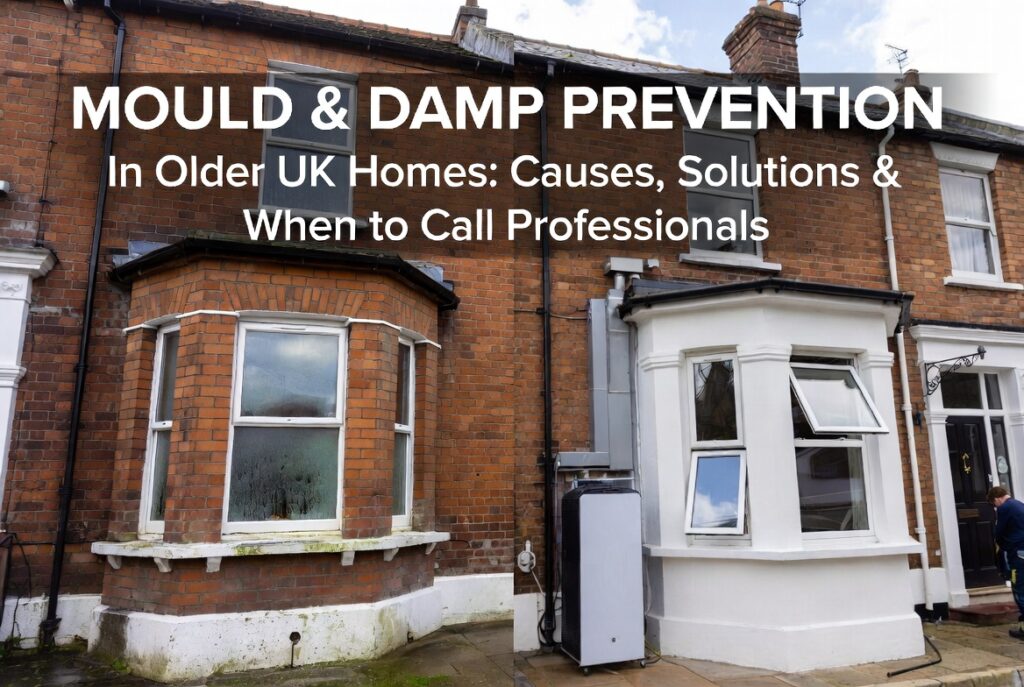
Common Causes of Damp and Mould in Victorian and Terraced Homes
Older properties often lack modern damp-proof courses or suffer from failed ones. Key causes include:
- Rising Damp — Moisture rising from the ground through walls, common where original damp-proof courses are bridged or deteriorated.
- Penetrating Damp — Water entering through cracks in brickwork, failed pointing, or leaking gutters and roofs.
- Condensation — The most frequent issue in 2026, caused by poor ventilation, inadequate insulation, and everyday moisture from cooking, showering, and drying clothes.
- Bridging — Raised external ground levels or inappropriate modern materials trapping moisture.
Terraced homes face additional challenges from shared walls and limited cross-ventilation.
Health Impacts of Damp and Mould
Damp and mould produce allergens, irritants, and toxins that primarily affect the respiratory system. Exposure can trigger or worsen asthma, cause respiratory infections, allergic reactions, eczema, and in severe cases, lead to more serious conditions. Children, the elderly, and those with pre-existing conditions are most vulnerable. Addressing issues promptly is essential for a healthy home environment.
Practical Prevention and Solutions
Daily Habits:
- Improve ventilation by opening windows, using extractor fans, and avoiding blocking airbricks.
- Maintain consistent low-level heating to reduce condensation.
- Use dehumidifiers in problem areas.
- Wipe away condensation quickly and address leaks immediately.
Structural Improvements:
- Ensure gutters, downpipes, and roofs are well-maintained.
- Improve external drainage and lower ground levels where possible.
- Install breathable insulation and vapour-permeable paints suitable for solid walls.
Remediation Steps:
For minor condensation mould, clean with appropriate fungicidal products. For persistent issues, professional diagnosis is recommended.
Professional Remediation Techniques and Costs in 2026
Professionals use targeted approaches such as chemical or physical damp-proof courses, waterproof membranes, and specialist replastering with salt-resistant materials.
Typical costs (including VAT):
- Damp survey: £200–£300
- Localised treatment: £500–£2,000
- Full rising damp treatment in a terraced home (including replastering): £1,500–£5,000+
- Extensive multi-room remediation: £5,000–£10,000+ depending on severity
Early intervention significantly reduces costs. Always choose specialists experienced with period properties who use breathable materials.
When to Call Professionals
Contact experts if:
- Mould returns quickly after cleaning or covers large areas.
- There are persistent musty odours, peeling plaster, or tide marks.
- Health symptoms worsen indoors.
- You suspect hidden damp behind walls or under floors.
A professional survey identifies the root cause rather than treating symptoms.
Long-Term Maintenance for Older Homes
Regular inspections of roofs, gutters, and external walls prevent recurrence. Use compatible materials during any renovations and monitor humidity levels. Combining improved ventilation with appropriate insulation offers the best long-term protection.
Regional Considerations
Victorian terraces in industrial cities and northern regions often face higher risks due to exposure and older infrastructure. Local specialists understand specific challenges, such as driving rain in coastal areas or high water tables in low-lying regions.
Conclusion
Effective mould and damp prevention in older UK homes, especially Victorian and terraced properties, combines understanding causes, adopting good habits, and seeking professional help when needed. By acting early in 2026, you can create a healthier, more comfortable living environment and protect your property’s long-term value.
Ready to Tackle Damp and Mould in Your Home?
Don’t risk your family’s health or unnecessary repair bills. Connect with vetted UK damp and mould specialists through Leedle.co for expert surveys, tailored solutions, and professional remediation. Start protecting your older home today with trusted professionals in your area.