What to Do If a Pipe Bursts: Quick Emergency Steps for South Yorkshire Homeowners
A burst pipe is one of the most stressful emergencies a homeowner can face. In South Yorkshire whether you’re in a Victorian terrace in Sheffield, a 1930s semi in Rotherham, a post-war house in Doncaster or a more modern property in Barnsley water can flood rooms within minutes, damage floors, ceilings and belongings, and create a real risk of mould or electrical hazards.
Yorkshire’s colder winters make frozen pipes a particular risk, and many older properties in the region still have original or ageing pipework that is more vulnerable to corrosion and wear. Acting quickly makes a huge difference. The steps below will help you stop the flow, keep everyone safe, limit the damage, and get professional help as soon as possible.
Stay calm and work through these actions in order. Every minute counts.
Shut off the main water supply Locate your internal stopcock (also called a stop tap) and turn it fully clockwise until it stops. In South Yorkshire homes the most common locations are:
Under the kitchen sink (especially in newer or mid-century properties)
In a cupboard under the stairs
Near the front door or where the mains pipe enters the house
In the garage, cellar, utility room or airing cupboard Many older terraced and semi-detached houses in Sheffield and Rotherham have the stopcock tucked away in less obvious places. If you cannot find the internal stopcock, look for an external one under a cover in the pavement or front garden (you may need a special key). Turning off the water is the single most important action.
Make the electrics safe If water is near sockets, light fittings, appliances or the consumer unit (fuse box), switch off the mains electricity immediately. Never stand in water while doing this. Water and electricity together create a serious shock and fire risk. If electrics have been affected, you may later need professional advice on safety see our guide tohouse rewiring costs in Sheffield.
Turn off the heating and boiler Switch off your central heating and boiler (or immersion heater) to stop hot water circulating and reduce further pressure on the system. If your boiler is older or showing signs of trouble, it’s worth reviewing typicalboiler replacement costs in South Yorkshire once the emergency is over.
Drain the remaining water Open all cold taps, starting from the lowest point in the house and working upwards. Flush every toilet. This releases residual water and pressure so less escapes through the burst. Keep a little water in a bucket or bowl for handwashing and toilet flushing if needed. Once the flow stops, turn the taps off again.
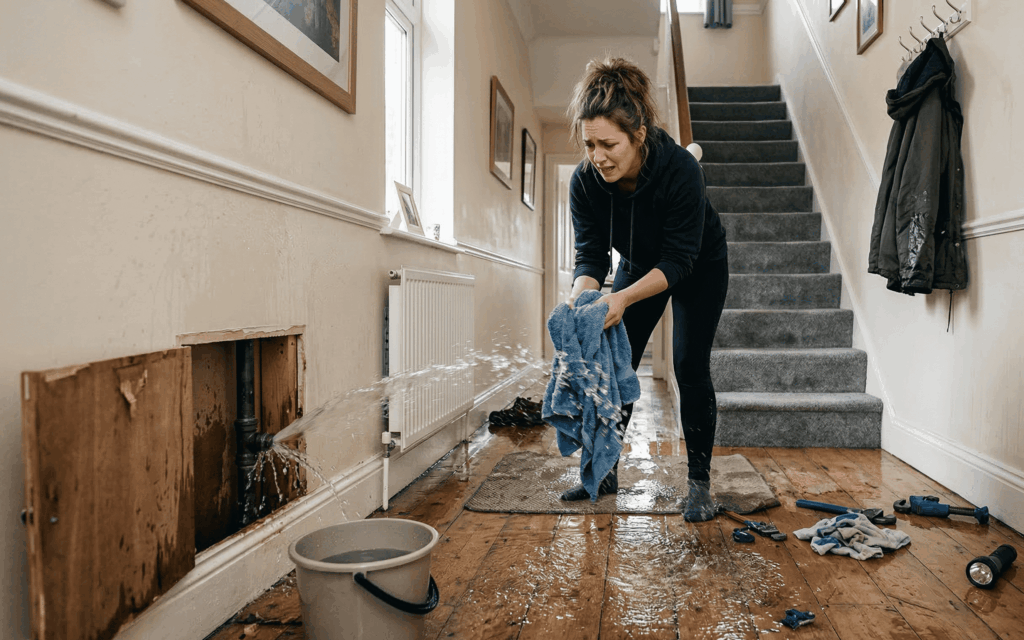
Contain the leak and protect belongings Place buckets, bowls or large containers under the leak. Use towels, old sheets or absorbent materials to soak up water and create temporary barriers so it does not spread to other rooms. Move furniture, rugs, electronics and valuables out of the affected area if it is safe to do so. Open windows for ventilation once the immediate danger is under control this helps reduce the risk of mould later.
Take clear photographs and videos of the burst pipe, the water damage and any affected belongings as soon as you can. These will be essential for an insurance claim.
Temporary Fixes While You Wait for Help
These measures only buy time. They are not permanent repairs.
Wrap the damaged section tightly with a thick cloth, towels or waterproof tape to slow the leak.
If you have a DIY emergency kit, a pipe repair clamp or epoxy putty can create a short-term seal. Clean and dry the pipe surface first for best results.
Never attempt major repairs yourself on pressurised pipes, gas-related systems or structural damage.
Safety and Damage-Minimisation Tips
Avoid touching any electrical switches or appliances while standing in water.
If a ceiling is bulging with water, do not go underneath it the structure may be compromised.
In older South Yorkshire properties (particularly those built before 2000), be aware that some materials may contain asbestos. If in doubt, isolate the area and wait for professional advice before disturbing anything.
Keep children and pets away from the wet areas.
Common Causes of Burst or Severely Leaking Pipes in South Yorkshire
Freezing and thawing during cold Yorkshire winters (water expands as it freezes and can split pipes, especially in poorly insulated lofts and exterior walls)
Corrosion or wear in the older metal pipework common in many Sheffield, Rotherham and Doncaster homes
High water pressure or gradual deterioration over time
Accidental damage during DIY work (for example drilling into a wall or floor)
Understanding the likely cause helps a plumber prevent the same problem recurring. Improving loft and pipe insulation can significantly reduce freeze risk check what support may be available under theWarm Homes Plan and insulation grants in South Yorkshire.
Insurance What to Do Next
Most UK home insurance policies cover damage caused by “escape of water” from a burst pipe, although the cost of repairing the pipe itself is not always included. Contact your insurer’s 24-hour emergency helpline as soon as the situation is under control. Have your policy number ready and share the photos you took. They can advise on approved tradespeople, temporary accommodation if needed, and the claims process. Keep all receipts for any emergency purchases or temporary repairs.
Getting Professional Help in South Yorkshire
Once the immediate crisis is contained, a qualified plumber is essential. DIY patches rarely last and can sometimes complicate insurance claims. Look for a WaterSafe-registered plumber (or Gas Safe if the issue involves your boiler or heating system). A proper repair will be compliant, guaranteed and far more reliable.
Ready to find trusted local help?
Unlock access to a network of skilled professionals ready to meet your needs. At Leedle.co, we connect you with trusted service providers across various sectors, ensuring you find the right expert for your project. Whether it’s home improvement, legal advice, or creative services, start your journey to quality work today. Submit your burst-pipe or leak details for free and receive quotes from vetted emergency plumbers covering Sheffield, Rotherham, Doncaster, Barnsley and the wider South Yorkshire area often available same-day or around the clock.
How to Prevent Future Burst Pipes in South Yorkshire Homes
Know exactly where your stopcock is and test that it turns freely every six months.
Insulate pipes in lofts, garages, cellars and other unheated spaces many older Yorkshire properties have limited loft insulation. Grants and support for insulation upgrades are available through theWarm Homes Plan in South Yorkshire.
Leave the heating on a low setting if you are away during cold weather, or ask a neighbour to check the property.
Fix small leaks promptly before they worsen.
Consider a plumber’s inspection of older pipework, especially in period terraces and semis common across the region.
In very cold spells, allowing a slight trickle of water through taps can help prevent freezing.
Frequently Asked Questions
What should I do first if a pipe bursts?
Turn off the internal stopcock, then switch off the electricity if water is near any fittings. Drain the system and contain the water.
Where is the stopcock usually located in South Yorkshire homes?
Most commonly under the kitchen sink, under the stairs, or where the mains water pipe enters the house. In older terraced properties it can sometimes be harder to find check cupboards thoroughly or look for an external stopcock.
Will my home insurance cover a burst pipe?
Policies typically cover the resulting water damage (escape of water). The pipe repair itself may or may not be included check your policy wording or speak to your insurer.
Can I repair a burst pipe myself?
Temporary measures are fine while waiting for help, but a permanent repair should always be carried out by a qualified plumber.
How long does a professional repair usually take?
Simple accessible repairs can often be completed in one to two hours. More complex jobs involving walls, floors or heating systems take longer.