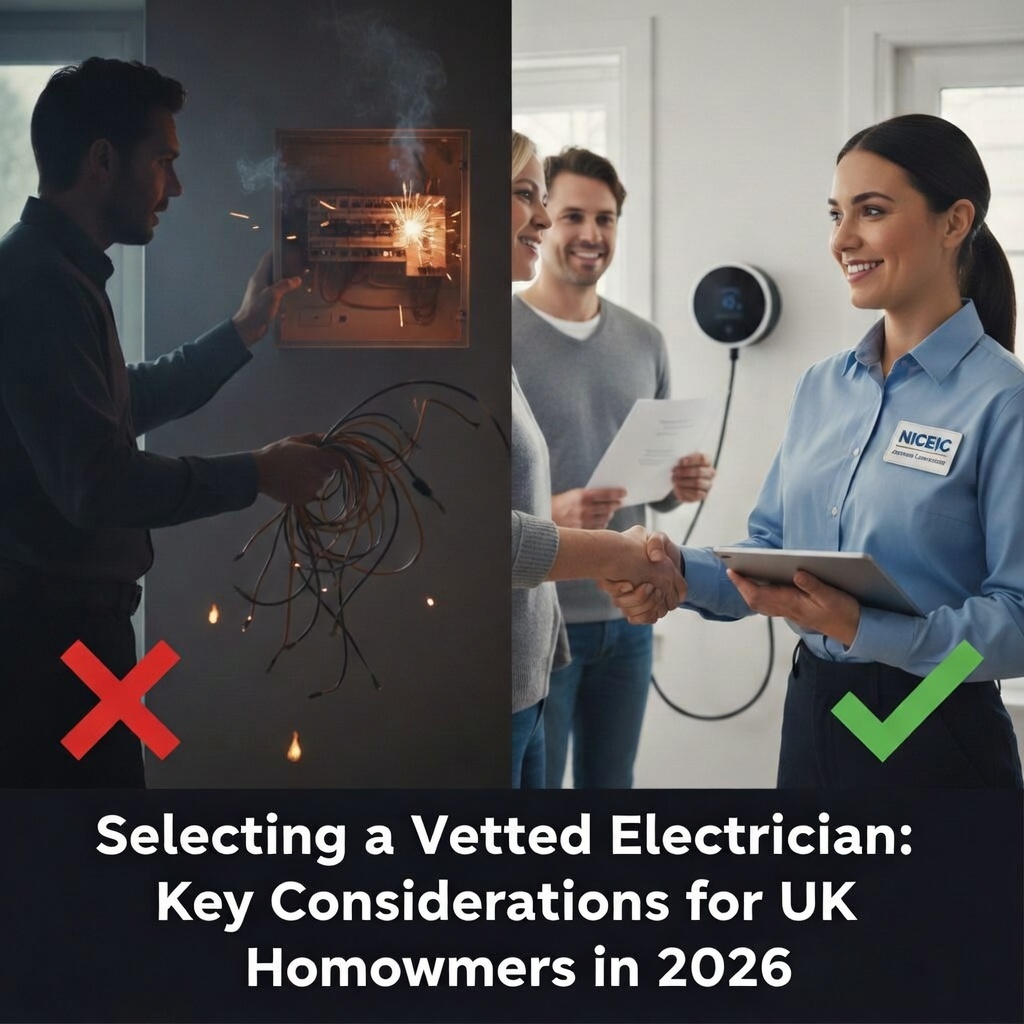
Selecting a Vetted Electrician: Key Considerations for UK Homeowners in 2026
One in four UK homeowners fail to check an electrician’s credentials before hiring, potentially risking electrical fires, invalid home insurance, and costly rework
Key Areas We Will Cover
Essential qualifications and certifications to look for in UK electricians
How to verify registration with government-approved schemes and insurance coverage
Evaluating experience, reviews, and professionalism for reliable service
Tips for obtaining and comparing quotes to avoid hidden costs
Understanding UK building regulations and post-work compliance
Regional insights for homeowners across England, Scotland, Wales, and Northern Ireland
Introduction
Selecting a vetted electrician is crucial for UK homeowners in 2026, as electrical work directly impacts safety, property value, and compliance with evolving building regulations. With rising energy costs and a push towards sustainable installations like EV chargers and smart home systems, choosing the right professional ensures work is done safely, efficiently, and to the highest standards. This guide outlines key considerations to help you find a competent electrician, avoiding common pitfalls and securing peace of mind.
In 2026, UK electrical trends emphasise energy efficiency, smart technology integration, and adherence to updated Part P regulations amid net-zero goals. Homeowners are increasingly seeking electricians skilled in renewable installations, such as solar panels and heat pumps, alongside traditional wiring and safety checks. Prioritising vetted professionals registered with schemes like NICEIC or NAPIT guarantees compliance and access to guarantees like the Platinum Promise.
Qualifications and Certifications: What to Check First
A qualified electrician must hold recognised credentials to perform work legally and safely in the UK.
City and Guilds NVQ Level 3 Diploma in Electrotechnical Services: This is the benchmark qualification, combining theory and practical training.
ECS Gold Card: Issued by the Electrotechnical Certification Scheme, it confirms competence and ongoing professional development.
Part P Registration: Essential for notifiable work, ensuring compliance with Building Regulations.
Always request proof of these before proceeding.
Verifying Registration and Scheme Membership
Government-approved schemes provide an extra layer of assurance.
Search the Electrical Competent Person website: A quick online check reveals if an electrician is registered with NICEIC, NAPIT, or ELECSA.
Ask for membership numbers: Legitimate electricians will provide these willingly for verification.
Trade associations: Look for logos from bodies like the Electrical Contractors’ Association for added credibility.
Unregistered work can void insurance and lead to fines.
Insurance and Guarantees: Protecting Your Investment
Reliable electricians carry public liability insurance of at least £2 million.
Warranties: Expect at least a six-year guarantee on workmanship, backed by schemes like NICEIC’s Platinum Promise.
Professional indemnity: Covers design flaws in complex projects.
Confirm these details in writing to safeguard against future issues.
Experience and Specialisation: Matching Skills to Your Project
Assess an electrician’s track record for your specific needs.
Project type: Whether it’s repairs, installations, or maintenance, choose someone with relevant experience, such as in smart homes or EV infrastructure.
Portfolio and references: Request examples of past work and contact previous clients.
Local knowledge: Electricians familiar with regional regulations, like Scotland’s differing standards, offer tailored advice.
Transparent pricing prevents surprises.
Multiple quotes: Get at least three detailed breakdowns, including labour, materials, and VAT.
Avoid low bids: Suspiciously cheap estimates often indicate corner-cutting or unqualified work.
Fixed vs. hourly: Opt for fixed prices for larger jobs to control costs.
Understanding UK Building Regulations and Safety
Compliance is non-negotiable.
Notifiable work: Major installations require local authority notification or self-certification by registered electricians.
Electrical Installation Certificates: Insist on these post-work for insurance and resale purposes.
Safety checks: Regular EICRs (Electrical Installation Condition Reports) every 5-10 years are recommended.
Regional Considerations for UK Homeowners
Electrical standards vary slightly across the UK.
England and Wales: Strict Part P adherence.
Scotland: Building Standards System requires warrants for certain works.
Northern Ireland: Similar to England but with unique consent processes.
Choose locally vetted professionals aware of these nuances.
Common Mistakes to Avoid When Hiring an Electrician
Don’t rush the process.
Skipping checks: Leads to substandard work.
Ignoring insurance: Exposes you to liability.
Overlooking sustainability: Miss out on energy-saving expertise in 2026’s green push.
Conclusion
Selecting a vetted electrician involves thorough checks on qualifications, registration, insurance, experience, and reviews to ensure safe, compliant, and cost-effective work. By prioritising these key considerations, UK homeowners can protect their properties, enhance energy efficiency, and comply with 2026 regulations, ultimately adding value and security to their homes.
Ready to Find a Vetted Electrician?
Take the hassle out of your search. Connect with trusted, registered electricians across the UK through Leedle.co for personalised quotes and expert service. Start your project today with confidence and discover top professionals in your area.
Frequently Asked Questions
Hiring a vetted electrician raises many queries for UK homeowners, especially with 2026’s focus on safety and sustainability. Here are answers to common questions to aid your decision-making.
What qualifications should I look for in a UK electrician?
Seek NVQ Level 3, ECS Gold Card, and Part P registration to ensure competence and legal compliance.
How can I verify if an electrician is registered?
Use the Electrical Competent Person website or ask for their scheme membership number from NICEIC, NAPIT, or similar.
Do electricians need insurance?
Yes, public liability insurance is essential, typically £2-5 million, to cover any accidents or damage.
What is the average cost of hiring an electrician in the UK?
Hourly rates range from £40-£60, with full projects like rewires costing £2,500-£4,000, varying by region and complexity.
How often should I get an electrical safety check?
Every 5-10 years via an EICR, or sooner if issues arise, to maintain safety and insurance validity.
Can I do electrical work myself?
Minor tasks like changing plugs are allowed, but notifiable work must be done by a registered professional to avoid fines.