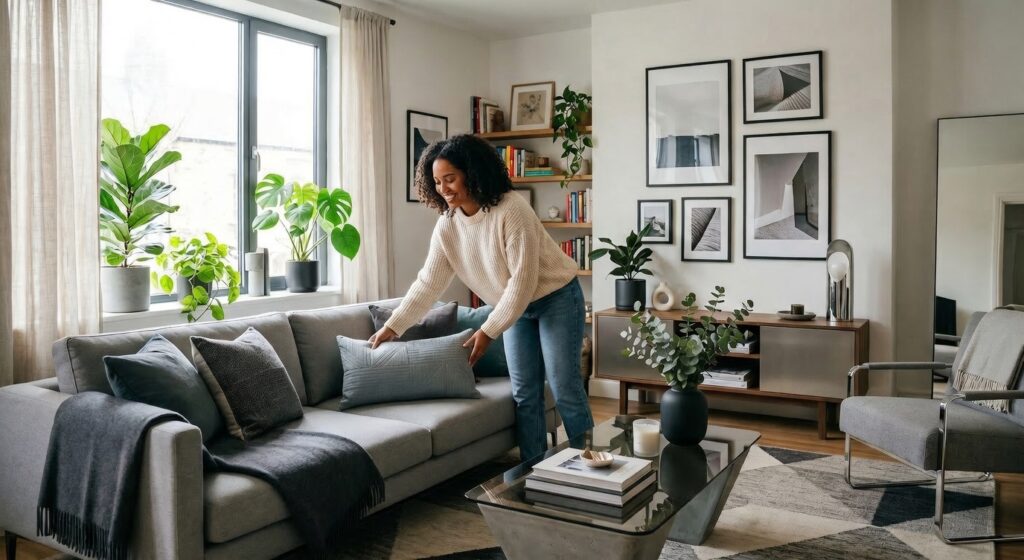
What Is Home Decorating and Interior Refresh in 2026?
An interior refresh involves updating colours, furnishings, accessories, lighting, and layouts without major building work. It ranges from a simple paint and accessories update to a full room redesign with new soft furnishings and statement pieces. In 2026, the focus shifts towards warmer, more tactile environments that prioritise comfort, sustainability, and personal storytelling over stark minimalism.
Why Refresh Your Interior in 2026?
UK homes benefit from refreshes that address rising energy awareness and desire for cosy, multifunctional spaces. Trends favour natural materials, layered textures, and nostalgic elements, helping homes feel inviting amid changeable weather. A well-executed refresh can add perceived value to your property and improve daily life quality.
Top Interior Design Trends for UK Homes in 2026
2026 interiors embrace warmth, personality, and tactility. Key trends include:
- Lived-in and layered spaces, imperfect, collected rooms with antiques, mismatched pieces, and personal items over clinical perfection.
- Warm neutrals and deeper colours. Moving away from cold whites to earthy tones, browns, olives, plums, and damson accents for cosiness.
- Texture contrast and maximalism Mixing fabrics like lace, quilts, velvet, and skirted furniture; bold rugs, decorative trims, and wallpapered ceilings.
- Natural and sustainable materials: reclaimed wood, dark woods, organic fabrics, and eco-friendly elements for storytelling depth.
- Nostalgic grandma chic Vintage quilts, doilies, lace details, and curated collections for sentimental appeal.
- Statement hardware and lighting Oversized sofas, hacked or dramatic lighting, and decorative picture mounts.
These trends promote homes that evolve with you, blending comfort with subtle luxury.
Popular Ideas for an Affordable Interior Refresh
Start small for big impact:
- Repaint walls in warm neutrals or accent colours.
- Introduce texture with throws, cushions, and rugs.
- Layer lighting with table lamps, floor lamps, and dimmable options.
- Add personality through antiques, art, or family heirlooms.
- Refresh soft furnishings like curtains or upholstery.
- Incorporate plants or natural elements for biophilic appeal.
DIY elements combined with key professional touches deliver excellent results.
Typical Costs of Home Decorating and Interior Refresh in 2026
Costs vary by scope, room size, and quality:
- Basic refresh (paint, accessories, minor soft furnishings): £1,000–£5,000 per room.
- Mid-range update (new flooring, lighting, furniture pieces): £4,000–£12,000 per room.
- Full designer-led refresh (bespoke elements, full styling): £5,000–£15,000+ per room.
- Whole-home refresh (multiple rooms): £15,000–£50,000+.
Additional expenses include:
- Professional decorator fees: £200–£500 per day.
- Interior designer packages: £495–£3,000 per room (or 5–10% of project spend).
- Materials like paint (£50–£200), rugs (£300–£2,000), and furniture (£500–£5,000+ per piece).
Regional premiums apply in London and the South East (up to 20–30% higher).
Factors Influencing Costs and Budgeting Tips
- Room size and complexity increase expenses.
- Material quality (e.g., sustainable vs budget fabrics).
- Location and access affect labour rates.
- Scope (DIY vs full professional).
Tips: Set a realistic budget with 10–15% contingency, prioritise high-impact areas like living rooms, shop sales for furniture, and phase updates room by room.
Steps to Plan Your Interior Refresh
- Assess needs, gather inspiration (mood boards).
- Set budget and priorities.
- Declutter and prepare surfaces.
- Choose colours and key pieces.
- Source materials and professionals.
- Implement in stages, starting with paint and lighting.
- Style and accessorise last.
Regular reviews ensure the space evolves.
Choosing Qualified Interior Decorators or Designers
Select professionals with proven expertise:
- Check portfolios, client reviews, and memberships (e.g., British Institute of Interior Design).
- Verify experience in similar styles and budgets.
- Request references and clear fee structures (hourly, fixed per room, or percentage).
- Ensure good communication and alignment with your vision.
Vetted experts avoid costly mistakes and deliver cohesive results.
Common Pitfalls to Avoid
- Overcommitting to trends without personal fit.
- Skipping mood boards or planning.
- Under-budgeting for accessories.
- Ignoring lighting layers.
- Rushing purchases without samples.
Professional input minimises these risks.
Regional Considerations Across the UK
Trends are broadly similar, but nuances exist:
- London/South East: Higher costs, emphasis on luxury textures.
- Scotland/Northern England: Preference for cosy, heritage-inspired elements.
- Wales/Northern Ireland: Focus on practical, sustainable choices with local materials.
Local professionals provide tailored insights.
Conclusion
Home decorating and interior refresh in 2026 allow you to create warm, characterful spaces that enhance everyday living and reflect your personality. By embracing trends like lived-in layers, warm tones, and tactile materials while budgeting wisely and seeking expert guidance, you can achieve stunning results affordably. With demand for comforting homes strong, a refresh offers excellent value and joy.
Ready to Refresh Your Home?
Don’t settle for outdated spaces. Connect with vetted UK interior decorators and designers specialising in 2026 trends through Leedle.co for personalised ideas, quotes, and flawless execution. Start transforming your home today with trusted professionals in your area.
Frequently Asked Questions
Home decorating prompts many questions, especially around trends, budgets, and professionals in 2026. Here are answers to common queries.