Idea 1: Embrace Tonal Layering for a Serene Atmosphere
Use varying shades of one hue, such as warm neutrals or moody blues, across walls, textiles, and ceilings to create depth without overwhelming small spaces. This trend makes attics feel cohesive and calming, ideal for bedrooms.
Idea 2: Maximise Natural Light with Skylights and Juliet Balconies
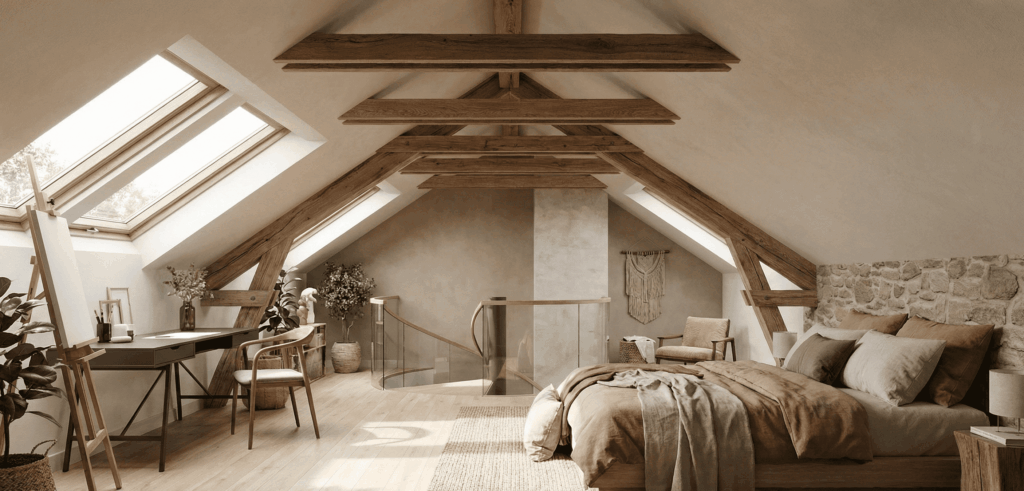
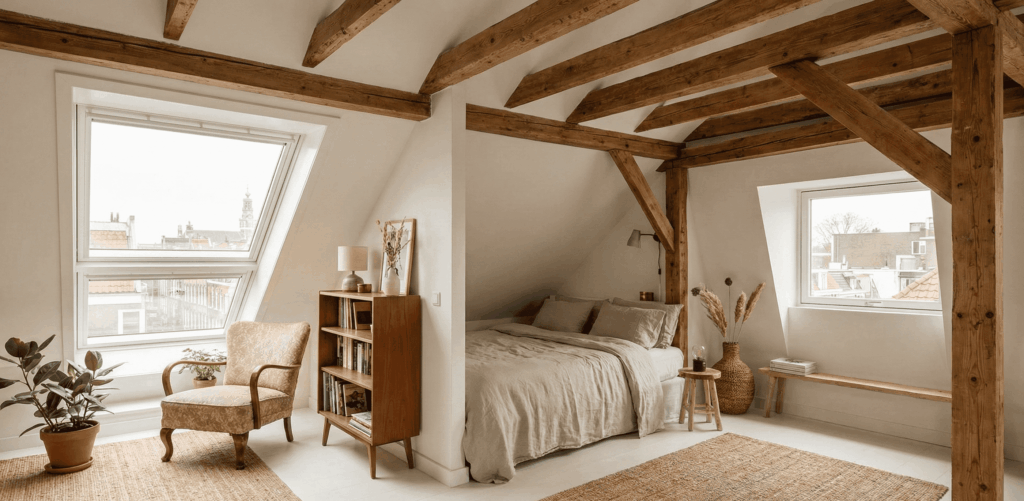
Install large rooflights or Juliet balconies to flood the space with daylight, countering low ceilings. Pair with light-reflective surfaces for an airy feel that aligns with 2026’s emphasis on organic, uplifting environments.
Idea 3: Incorporate Curved Furniture for Organic Flow
Opt for rounded headboards, arched mirrors, or sculptural seating to soften awkward angles and add modern elegance. Curved elements echo 2026’s organic shapes, making sloped ceilings feel inviting rather than restrictive.
Idea 4: Highlight Exposed Beams and Timber Features
Leave original beams exposed and treat them with natural finishes for rustic charm. This adds character and ties into the trend for authentic, handcrafted materials that tell a story.
Idea 5: Create a Cocoon Bedroom with Layered Textures
Build a padded, upholstered retreat using plush linens, wool throws, and textured wallpapers. This 2026 favourite promotes restful intimacy, perfect for attic master suites.
Idea 6: Add Smart, Built-In Storage Solutions
Use bespoke under-eave cabinets, sliding barn doors, or mirrored wardrobes to maximise every inch. Functional yet seamless storage keeps spaces clutter-free while embracing lived-in authenticity.
Idea 7: Introduce Earthy Neutrals and Rust Tones
Paint or clad in clay-inspired shades, warm greiges, or terracottas for grounding warmth. These palettes shift beautifully with light, suiting South Yorkshire’s variable weather.
Idea 8: Design Multi-Functional Zones
Divide the attic into sleeping, working, and relaxing areas with low partitions or rugs. Versatile layouts support remote work or hobbies, reflecting 2026’s flexible living focus.
Idea 9: Use Natural Materials for Tactility
Incorporate linen curtains, raw wood flooring, stone accents, or clay plaster for sensory richness. These eco-friendly choices add permanence and align with sustainable luxury trends.
Idea 10: Feature Statement Lighting as Focal Points
Hang sculptural chandeliers or orb pendants to draw the eye upwards. Lighting becomes art in lofts, enhancing drama without cluttering limited floor space.
Idea 11: Add Gentle Clutter for Lived-In Charm
Layer vintage textiles, books, and personal objects for warmth. This counters sterile perfection, creating inviting, story-filled spaces.
Idea 12: Incorporate Botanical and Green Accents
Bring in plants or faded green palettes to connect with the outdoors. This freshens attics, tying into nature-inspired 2026 trends.
Idea 13: Opt for Bespoke Low-Level Furniture
Custom low beds or seating fit sloping ceilings perfectly, maintaining flow and comfort in compact areas.
Idea 14: Create a Private En-Suite Oasis
Add a compact bathroom with skylights for spa-like luxury. Concealed fittings and natural stone keep it serene.
Idea 15: Blend Heritage with Modern Twists
In South Yorkshire homes, nod to industrial or rustic roots with reclaimed elements, then layer contemporary curves and tones for timeless appeal.
Conclusion
These 15 interior design ideas for lofts and attics in 2026 blend practicality with emerging trends like tonal warmth, organic textures, and personal authenticity. By focusing on light, tactility, and clever space use, you can create a transformative retreat that enhances daily life and adds lasting value to your home.
Ready to Transform Your Loft?
Unlock your home’s hidden potential today. Connect with vetted local design professionals in South Yorkshire through Leedle for personalised quotes and expert implementation. Discover top Sheffield design agencies with Leedle and start your project with confidence.
Frequently Asked Questions
Loft and attic transformations spark many questions, especially with 2026 trends emphasising sustainability and personal style. Here are answers to common queries to help you plan effectively.