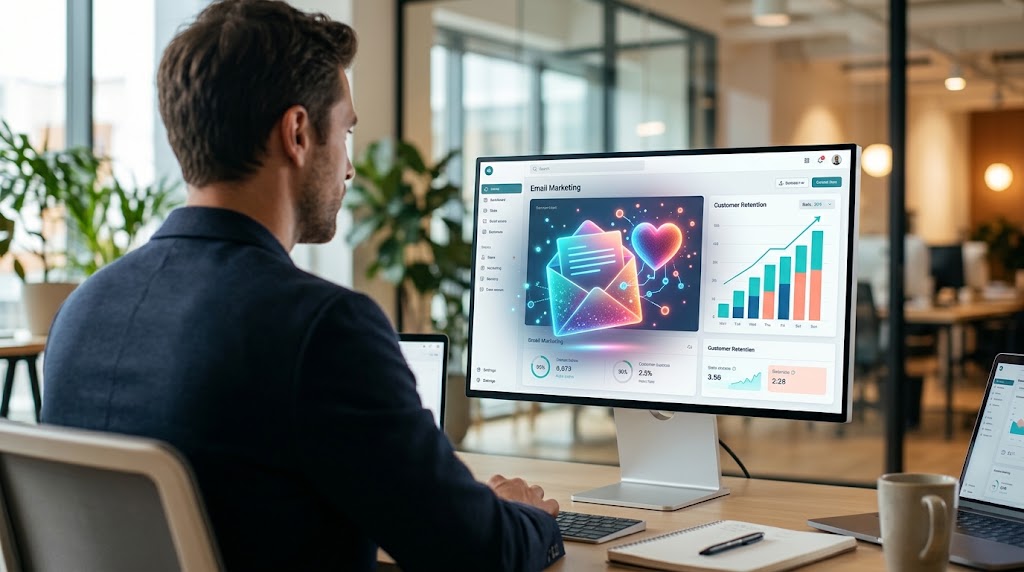
Acquiring a new customer can cost five to seven times more than keeping an existing one, yet many businesses still pour most of their budget into chasing fresh leads. Smart email marketing flips that equation by turning one time buyers into loyal, repeat customers who spend more and stay longer.
Email marketing increases customer retention by delivering relevant, timely messages that keep your brand top of mind and make customers feel valued. Segmented lists, automated triggered emails, personalised content and consistent value driven communication all work together to encourage repeat purchases, reduce churn and raise lifetime value. When done well, email remains one of the highest returning channels for long term loyalty.
Key Areas We Will Cover:
- Why segmentation turns generic messages into relevant conversations
- How triggered and automated emails keep customers engaged at every stage
- The power of delivering genuine value instead of constant sales pitches
- Using personalisation and behavioural data to feel more human
- Testing, feedback and optimisation that improve results over time
- Practical email sequences every business should run
- Common mistakes that quietly damage retention
Introduction:
Most businesses know that retaining customers is more profitable than constantly hunting for new ones, yet the practical steps often feel unclear. Email marketing offers a direct, measurable and relatively low cost way to stay connected long after the first purchase. When messages arrive at the right moment with the right content, customers feel recognised rather than marketed at. This guide explains the strategies that turn casual buyers into repeat customers and shows how to build email systems that support lasting loyalty rather than short term spikes.
Why Does Smart Segmentation Make Retention Emails Far More Effective?
Sending the same message to everyone quickly leads to low open rates and unsubscribes. Segmentation groups customers by behaviour, purchase history, engagement level or lifecycle stage so each person receives content that matches their situation. New customers need onboarding and reassurance. Active buyers respond to recommendations and loyalty rewards. At risk customers benefit from gentle win back offers or feedback requests. Inactive contacts may need a final re engagement attempt or a clean exit. Using data such as last purchase date, average order value or email engagement allows you to speak to real needs instead of guessing. The result is higher relevance, stronger trust and more repeat business.
How Do Triggered Emails Keep Customers Coming Back Without Constant Manual Work?
Triggered emails fire automatically when a specific action or time threshold is reached. A welcome series greets new subscribers and sets expectations. Post purchase messages thank the customer, offer usage tips and invite a second order. Cart abandonment sequences recover lost sales. Replenishment reminders arrive just before a consumable product is likely to run out. Win back campaigns reach people who have gone quiet and give them a reason to return. Because these messages arrive in response to real behaviour, they feel timely rather than random. Automation platforms handle the sending while you focus on the content and offers that matter most.
What Kind of Value Should You Actually Put Inside Retention Emails?
Customers stay when they feel the relationship benefits them. Value driven emails include practical tips related to products they already own, exclusive early access, educational content, answers to common questions or genuine appreciation. A fashion retailer might send styling ideas that feature previous purchases. A software company can share short tutorials that help users get more from the tool. Service businesses can offer seasonal reminders or maintenance advice. The key is to balance helpful content with occasional commercial messages so the inbox never feels like a pure sales channel. When people open your emails expecting usefulness, they are more likely to stay subscribed and buy again.
How Can Personalisation and Behavioural Data Make Emails Feel Human?
Basic personalisation uses a first name. Stronger personalisation references past purchases, browsing history or milestones. Dynamic content blocks can show different product recommendations or offers depending on the segment. Behavioural triggers ensure messages arrive when they are most relevant, such as after a support ticket is closed or when a subscription is about to renew. The goal is to make each recipient feel that the message was written with them in mind rather than blasted to a list. Over time this builds the sense that your brand notices and cares about individual customers, which is a powerful driver of loyalty.
Why Do Testing and Customer Feedback Continuously Improve Retention Results?
Even well designed campaigns can be improved. A/B testing subject lines, send times, offers and call to action wording reveals what actually drives opens, clicks and purchases for your audience. Running tests on a portion of the list before full rollout reduces risk. Equally important is listening to customers through short surveys, reply monitoring or preference centres. Feedback often highlights friction points or content gaps that pure data does not show. Combining quantitative results with qualitative insight lets you refine sequences, remove under performing emails and strengthen the ones that work. Retention improves steadily when the programme is treated as an ongoing conversation rather than a fixed set of templates.
Which Practical Email Sequences Should Most Businesses Run First?
Start with a clear welcome series that delivers on the promise made at signup and guides new contacts toward their first or second purchase. Add a post purchase sequence that confirms the order, offers support and gently encourages the next step. Build a simple win back flow for customers who have not engaged for a defined period. Loyalty or VIP messages can recognise high value customers with early access or exclusive offers. Replenishment or renewal reminders work well for consumable products and subscriptions. These core sequences cover the majority of retention opportunities and can be expanded later as data and resources allow.
What Common Mistakes Quietly Undermine Email Retention Efforts?
Over emailing active customers leads to fatigue and unsubscribes. Ignoring inactive contacts until it is too late wastes potential win back opportunities. Relying solely on discounts trains customers to wait for deals rather than buy at full price. Failing to clean the list of chronically inactive addresses harms deliverability for everyone. Sending generic content that ignores purchase history makes the brand feel distant. Finally, measuring only open rates instead of repeat purchase rates and lifetime value can hide whether the programme is truly supporting retention. Avoiding these pitfalls keeps the channel healthy and effective.
Common Questions and Misconceptions:
Many people assume email is outdated because social media feels more modern. In reality email still delivers some of the highest returns of any digital channel and remains under the business’s direct control. Another misconception is that retention emails must always include a discount. Value based content and recognition often perform better than constant price cuts. Some owners believe automation removes the personal touch. When set up with good data and thoughtful copy, automated messages can feel more relevant than manual ones. Finally, the idea that only large companies can run sophisticated sequences is outdated. Most modern email platforms make the core retention flows accessible to small and medium businesses.
Conclusion:
Email marketing remains one of the most reliable ways to increase customer retention because it combines relevance, timing and direct access. Segmented lists, triggered sequences, genuine value and continuous testing turn one time buyers into repeat customers who stay longer and spend more. By treating email as an ongoing relationship channel rather than a pure sales tool, businesses build loyalty that compounds over time and reduces reliance on expensive new customer acquisition.
Ready to Strengthen Customer Loyalty With Smarter Email Marketing?
Unlock access to a network of skilled professionals ready to meet your needs. At Leedle.co, we connect you with trusted service providers across various sectors, ensuring you find the right expert for your project. Whether it is email marketing support, digital strategy or any other professional service, start your journey to quality work today. Visit Leedle.co and take the next step toward stronger customer retention.
FAQ:
It keeps your brand visible with relevant, timely messages that remind customers of the value you provide, encourage repeat purchases and make them feel recognised rather than forgotten.
Segment your list by behaviour and lifecycle stage so new, active, at risk and inactive customers each receive messages that match their situation.
No. Most modern email platforms include automation, segmentation and basic personalisation features that cover the core sequences needed for strong retention results.
Frequency should vary by segment. Active customers may receive value based messages one or two times a week, while at risk or inactive contacts need fewer, more carefully timed messages.
Not necessarily. Helpful content, product tips, early access and genuine recognition often build stronger long term loyalty than constant price incentives.
Look beyond open rates to repeat purchase rate, customer lifetime value, reactivation rate and unsubscribe trends to understand whether the programme is truly supporting loyalty.