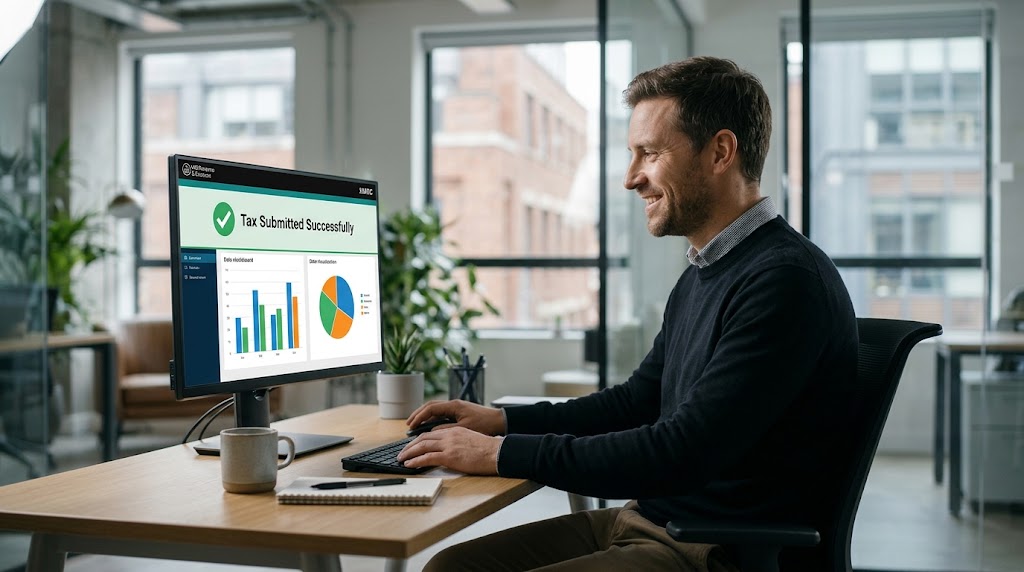
Imagine finishing your tax return in hours instead of weeks, with fewer errors and a clearer view of what you owe all year round. That is exactly what today’s digital tools now deliver for UK small businesses facing Making Tax Digital rules and rising compliance demands.
Technology simplifies tax filing for small businesses by automating bookkeeping, categorising expenses, generating accurate reports and enabling direct electronic submission to HMRC. Cloud accounting platforms, AI powered tools and mobile apps reduce manual work, cut errors and keep records ready for quarterly updates and year end returns. The result is less stress, better cash flow visibility and more time to run the business.
Key Areas We Will Cover:
- How automated bookkeeping ends the shoebox of receipts nightmare
- Why cloud platforms and AI make compliance faster and more accurate
- The role of Making Tax Digital software in quarterly reporting
- Practical mobile tools that capture expenses on the go
- How electronic filing and error checks protect you from penalties
- Choosing the right tech stack for sole traders and limited companies
- Common mistakes to avoid when going digital
Introduction:
Tax season used to mean late nights, missing receipts and the constant worry of getting something wrong. For UK small businesses that picture is changing fast. Modern software now handles the heavy lifting, from sorting bank transactions to preparing returns that meet HMRC standards. With Making Tax Digital for Income Tax rolling out from April 2026, digital tools are no longer optional for many sole traders and landlords. They have become the simplest route to staying compliant while gaining real time insight into business performance. This guide shows exactly how technology removes friction from tax filing and turns a once dreaded task into a manageable routine.
How Does Automated Bookkeeping Turn Chaos Into Clarity?
Automated bookkeeping software links directly to your business bank accounts and credit cards. It imports transactions daily and suggests categories based on past patterns and supplier names. Platforms such as Xero, QuickBooks and FreeAgent learn your habits over time, so the majority of entries need only a quick review rather than manual typing. Receipts can be photographed and matched automatically, eliminating the traditional end of year scramble. When tax time arrives, profit and loss figures, expense summaries and VAT reports are already complete and ready to export or submit. This continuous approach reduces errors that often appear when everything is left until January.
Why Are Cloud Platforms and AI Now Essential for Accurate Tax Work?
Cloud accounting keeps every record in one secure online location accessible from any device. Multiple users, including your accountant, can view the same live data without emailing spreadsheets back and forth. Artificial intelligence adds another layer by flagging unusual transactions, spotting potential deductions and estimating your tax position throughout the year. AI can also read invoices and receipts with high accuracy, cutting data entry time dramatically. These features give small business owners earlier warning of cash flow issues and help them plan payments instead of facing a single large bill at the end of the year. The same systems produce the digital records required under Making Tax Digital rules.
What Difference Does Making Tax Digital Compatible Software Actually Make?
Making Tax Digital for Income Tax requires qualifying sole traders and landlords to keep digital records and send quarterly updates to HMRC. Compatible software creates those records automatically and submits the updates through a secure digital link. You still complete a final tax return, but the bulk of the work is spread across the year. Businesses already using MTD for VAT report time savings, greater confidence in their figures and fewer mistakes. From April 2026 the first wave of income tax filers join the system, with lower thresholds following in 2027 and 2028. Choosing HMRC recognised software from the outset ensures you meet the rules without last minute changes.
How Do Mobile Apps Keep Expenses Organised Wherever You Work?
Mobile apps let you capture receipts the moment they are issued. A quick photo uploads the image, extracts key details and links the cost to the correct category and tax period. Expense tracking apps integrate with main accounting platforms so nothing is lost between phone and ledger. Many also allow mileage logging with GPS and project based coding for clearer profitability analysis. For freelancers and tradespeople who move between sites, this real time capture removes the risk of forgotten claims and supports stronger tax positions. The same apps often provide instant cash flow snapshots that help daily decision making.
Why Does Electronic Filing Reduce Risk and Speed Up the Whole Process?
Electronic submission replaces paper forms and postal delays. Software performs built in checks for missing information, inconsistent figures and common errors before the return is sent. HMRC systems process digital filings faster than paper ones and confirm receipt almost immediately. Direct bank feeds and automated calculations further lower the chance of arithmetic mistakes that trigger enquiries. For limited companies the same digital route supports corporation tax and Companies House filings in compatible formats. The combined effect is quicker completion, earlier certainty and a clear audit trail if questions arise later.
Which Technology Choices Work Best for Different Types of Small Business?
Sole traders and freelancers often favour FreeAgent or the lower tier plans of Xero and QuickBooks because they include Self Assessment support and straightforward tax timelines. Limited companies benefit from fuller features such as multi user access, advanced reporting and payroll add ons. Sage remains popular where payroll integration matters. Budget conscious owners can start with free or low cost options that still meet MTD requirements and upgrade as the business grows. The key is to select software that is HMRC recognised, connects to your bank, and allows easy collaboration with an accountant when needed. Most platforms offer free trials so you can test the fit before committing.
What Common Pitfalls Should You Avoid When Moving to Digital Tax Tools?
Some owners continue mixing paper and digital records, which creates gaps and extra work at year end. Others choose software that is not fully MTD compatible and discover the problem only when quarterly updates are due. Leaving bank feeds unreconciled for months reduces the accuracy of automated categorisation. Relying solely on AI without periodic human review can miss context specific deductions or unusual transactions. Finally, failing to back up or export data regularly leaves the business exposed if access is lost. Setting a simple monthly review habit and involving your accountant early prevents most of these issues.
Common Questions and Misconceptions:
Many small business owners believe digital tools are only for larger firms. In reality the most popular platforms are designed specifically for sole traders and micro businesses and often cost less than the time saved. Another misconception is that Making Tax Digital means four full tax returns each year. Quarterly updates are summary figures only, with the detailed return still completed once. Some fear that software removes the need for an accountant. The opposite is true for most people: clean digital records free accountants to focus on advice rather than data entry. Finally, concerns about data security are valid yet modern cloud systems use bank level encryption and regular independent audits.
Conclusion:
Technology has removed most of the friction from tax filing for UK small businesses. Automated bookkeeping, cloud platforms, AI assistance, mobile capture and electronic submission combine to deliver faster preparation, fewer errors and continuous visibility of your tax position. With Making Tax Digital expanding, these tools are rapidly becoming the standard way to stay compliant and gain better control of business finances. Starting with the right software today turns a once stressful obligation into a routine that supports growth rather than hindering it.
Ready to Make Tax Filing Simple and Stress Free?
Unlock access to a network of skilled professionals ready to meet your needs. At Leedle.co, we connect you with trusted service providers across various sectors, ensuring you find the right expert for your project. Whether it is accounting support, software guidance or any other professional service, start your journey to quality work today. Visit Leedle.co and take the next step toward smoother, more confident tax management.
FAQ:
It automates transaction categorisation, generates ready made reports, checks for errors and allows direct electronic submission to HMRC, cutting hours of manual work and reducing mistakes.
Yes. You must use HMRC recognised software that keeps digital records and can submit quarterly updates through a digital link. Most popular UK accounting platforms already meet this requirement.
AI speeds up categorisation, flags unusual items, suggests possible deductions and estimates your tax position during the year, but a human review is still essential for final accuracy and advice.
Reputable platforms use strong encryption, multi factor authentication and regular security audits. Many also allow you to control exactly who can view or edit your records.
Choose an HMRC recognised cloud package with bank feeds, start importing recent transactions and photograph receipts as they arrive. Most platforms offer free trials so you can switch gradually.
They reduce the time spent on basic data entry, allowing accountants to focus on higher value advice, tax planning and year end review. Most small businesses still benefit from professional oversight.
Many owners report cutting preparation time from days to hours once the system is set up and bank feeds are running smoothly. The bigger gain is the reduction in year end stress and last-minute corrections.